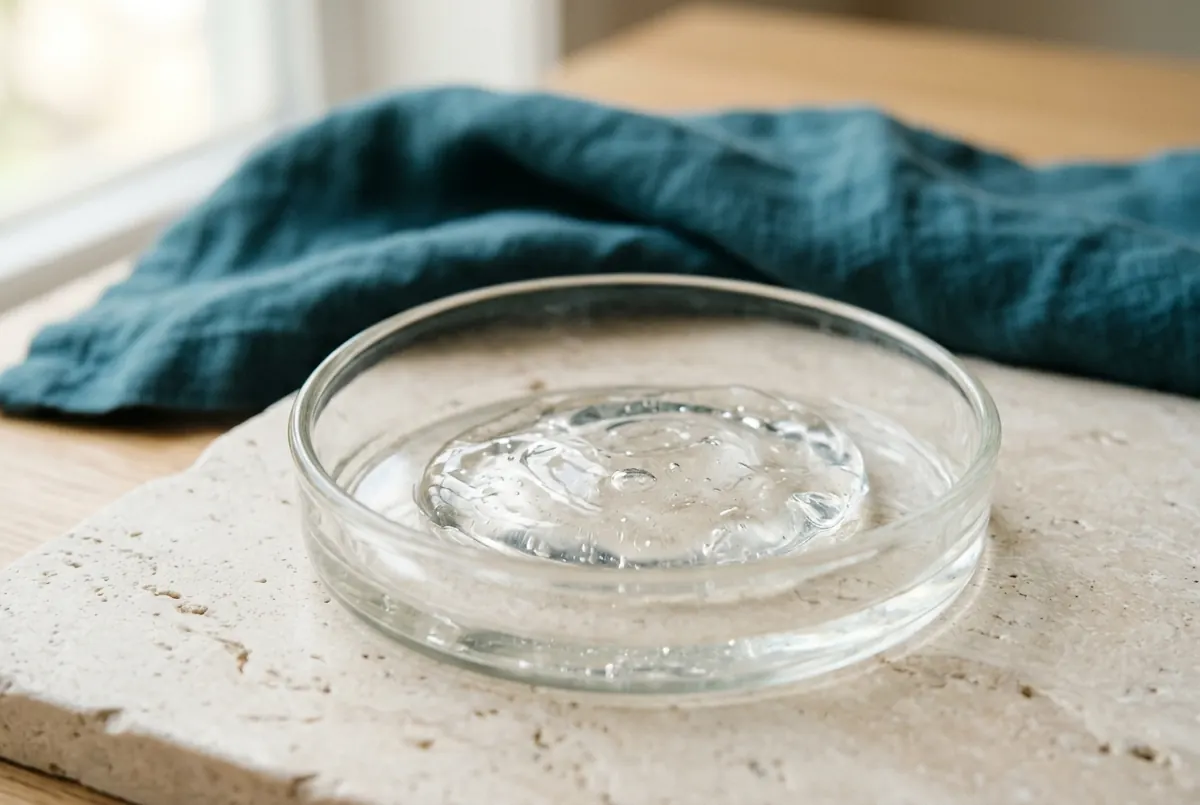
Dermal fillers are gel-like substances injected under the skin to create a smoother or fuller appearance. The FDA regulates them as medical devices, and the effects of most are temporary.1
Here is how the FDA sorts them, what it has approved them for, what it warns against and what to ask. Whether to have filler is for you and a clinician.
The four materials
The FDA lists three temporary materials that the body gradually absorbs, and one that stays.13 It puts the effects of hyaluronic acid at approximately 6 to 12 months and calcium hydroxylapatite at approximately 18 months.3
Filler materials, from the FDA
| Material | What it is | How long, per the FDA | Examples we cover |
|---|---|---|---|
| Hyaluronic acid | What it is: A sugar found in body tissues; some is chemically modified to last longer | How long, per the FDA: About 6 to 12 months | Examples we cover: Juvederm, Restylane |
| Calcium hydroxylapatite | What it is: A mineral found in teeth and bone; visible on x-rays | How long, per the FDA: About 18 months | Examples we cover: Radiesse |
| Poly-L-lactic acid | What it is: A biodegradable man-made polymer, given in a series of injections | How long, per the FDA: Builds over several weeks; may last up to 2 years | Examples we cover: Sculptra |
| PMMA beads | What it is: Tiny plastic beads in bovine collagen; the one filler not absorbed | How long, per the FDA: Permanent | Examples we cover: None |
Some fillers also contain lidocaine to reduce discomfort.3 Because most are absorbed, the injections may have to be repeated to keep the effect, and how long it lasts depends on the material and the area.12 Our pages on Juvederm, Radiesse and Sculptra go into each, and Skinvive covers a hyaluronic acid injection approved for cheek skin smoothness.
What the FDA has approved them for
Fillers are approved for specific uses, in adults aged 22 and older.1
Approved uses, per the FDA
- Moderate to severe facial wrinkles and skin folds
- Fullness of the lips, cheeks, chin, under-eye hollows, jawline and back of the hand
- Restoring facial fat loss in people with HIV
- Correcting acne scars on the cheek
Approval is by product, so ask whether the filler offered is approved for the area. Our pages on lip filler and under-eye filler cover two common areas.
What the FDA warns against
The FDA says it has not approved injectable silicone, or any filler, for body contouring or enhancement. It warns against filler in the breasts, buttocks or spaces between muscles, which can lead to serious injury, including long-term pain, infection, permanent scarring, disfigurement and even death.1 It lists the breast, buttocks, feet, bone, tendon, ligament and muscle, as well as the glabella (between the eyebrows), nose, around the eyes, forehead and neck, among uses it recommends against.2
It also warns against needle-free devices for injecting filler, which it says have caused serious injuries, and against buying lip or facial fillers sold directly to the public, which are not FDA-approved and may be contaminated.1 It has warned that unapproved versions of Juvederm, such as Ultra 2, 3 and 4, have been sold online in the US.3
Risks
Common risks are bruising, redness, swelling, pain, tenderness, itching and rash. Most appear shortly after injection and many resolve in days to weeks. Less common ones include lumps (nodules or granulomas), infection, an allergic reaction and tissue death.1
The most serious risk is accidental injection into a blood vessel. The FDA says that can cause skin necrosis, stroke or blindness, and that while the chance is low, the complications can be serious and may be permanent.1 Filler can also be hard to take back: reducing or removing it may need further injections or surgery, and for some materials it may be difficult or impossible.12
Myth
Any filler can go anywhere on the face or body.
Fact
The FDA approves fillers for specific uses in adults 22 and older, and says it has not approved any filler for body contouring or enhancement. It lists the area around the eyes, nose, forehead and neck among uses it recommends against.
At the clinics we list
Of the 7,475 med spas we list, 2,216 name Sculptra, 1,205 Radiesse, 1,046 Juvederm and 872 Restylane. Naming a brand doesn't tell you what a clinic uses or for which area, so ask.4
Filler brands med spas name
Share of the 7,475 med spas we list
| Item | Value |
|---|---|
| Sculptra | 30% |
| Radiesse | 16% |
| Juvederm | 14% |
| Restylane | 12% |
The FDA's advice is to work with a licensed provider experienced in injecting dermal fillers who uses properly labeled, sealed vials or pre-filled syringes of FDA-approved filler, and to read the patient labeling.1 Our guide to choosing a lip filler provider goes through the checks for any filler.
Here is what to bring to a consultation.
Questions to bring
The product
The person and the plan
Cost
We don't give prices on this page. Our lip filler cost guide shows how clinics quote filler, per syringe.
Find clinics
Each listing shows what the clinic’s own website offers, its Google reviews and its hours. No clinic is graded yet.
Common questions
What are dermal fillers made of?
The FDA names four materials: hyaluronic acid, calcium hydroxylapatite and poly-L-lactic acid, which the body absorbs over time, and PMMA beads in bovine collagen, which are not absorbed.
How long do dermal fillers last?
It depends on the material and the area. The FDA says hyaluronic acid lasts approximately 6 to 12 months, calcium hydroxylapatite approximately 18 months, and poly-L-lactic acid may last up to 2 years.
What are fillers approved for?
Specific uses in adults 22 and older, including facial wrinkles and folds, fullness of the lips, cheeks, chin, under-eye hollows, jawline and back of the hand, and cheek acne scars. The FDA has not approved any filler for body contouring.
What is the biggest risk of dermal filler?
Accidental injection into a blood vessel. The FDA says it can cause tissue death, stroke or blindness. The chance is low, but the complications can be serious and permanent.
Sources (4)
- FDA, Dermal Filler Do's and Don'ts for Wrinkles, Lips and More · US Food and Drug Administration (content current as of 07/07/2023 per the page) · read 30 Oct 2026
- FDA, Dermal Fillers (Soft Tissue Fillers) · US Food and Drug Administration, medical devices page (content current as of 07/06/2023 per the page) · read 30 Oct 2026
- FDA, FDA-Approved Dermal Fillers · US Food and Drug Administration, medical devices page (content current as of 11/09/2020 per the page) · read 30 Oct 2026
- Clinic websites: what they say on their own pages · Our own read of listed clinics' websites in the 14 states we cover, October 2026. A clinic counts once. · read 30 Oct 2026